Down vs Synthetic Insulation | Which do you need?
- Kit Lists and Guides
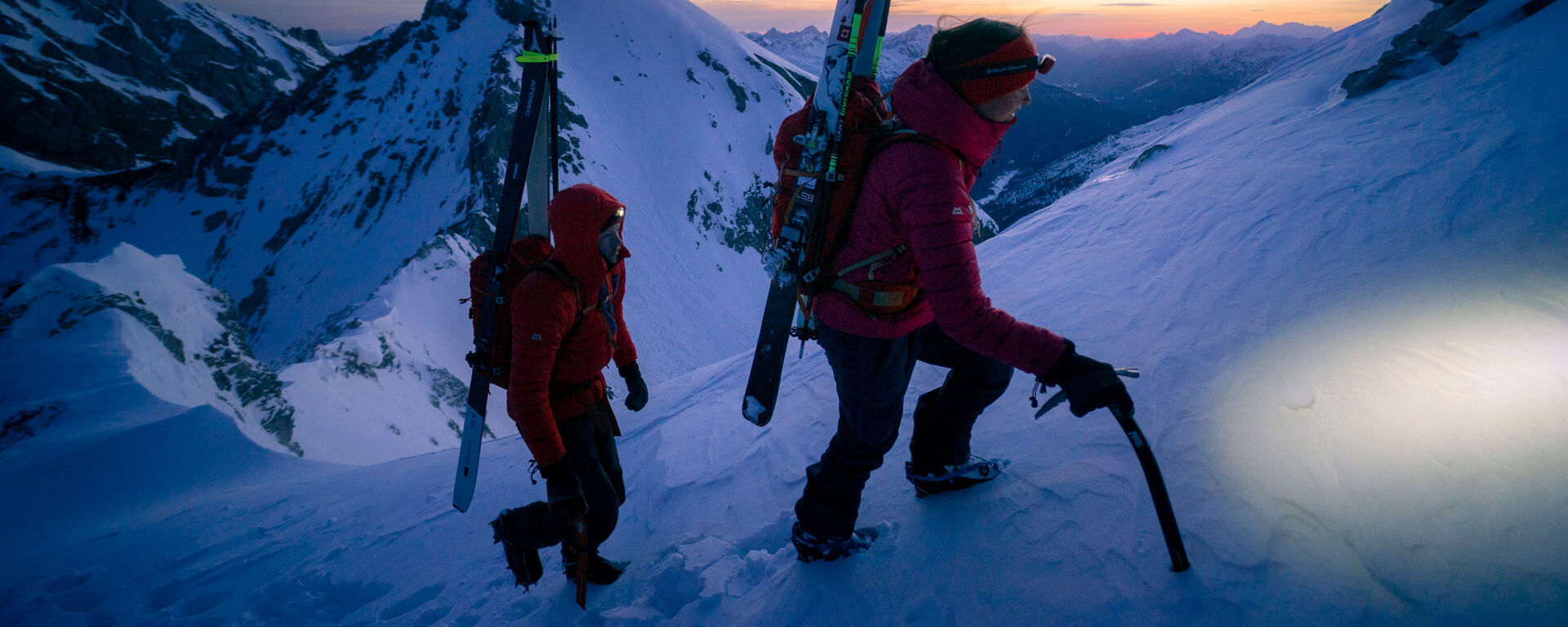
Choosing between down & synthetic insulation can be confusing. Both have enormous benefits in the mountains but also some downsides that need to be carefully considered, especially if you’re buying one jacket for a variety of climbing, mountaineering or hiking. This blog will guide you through the pros and cons, helping you to choose the right jacket for your intended use.
Which is better, a down or synthetic insulated jacket?
First, you must consider your needs and the conditions you expect when choosing an insulated jacket.
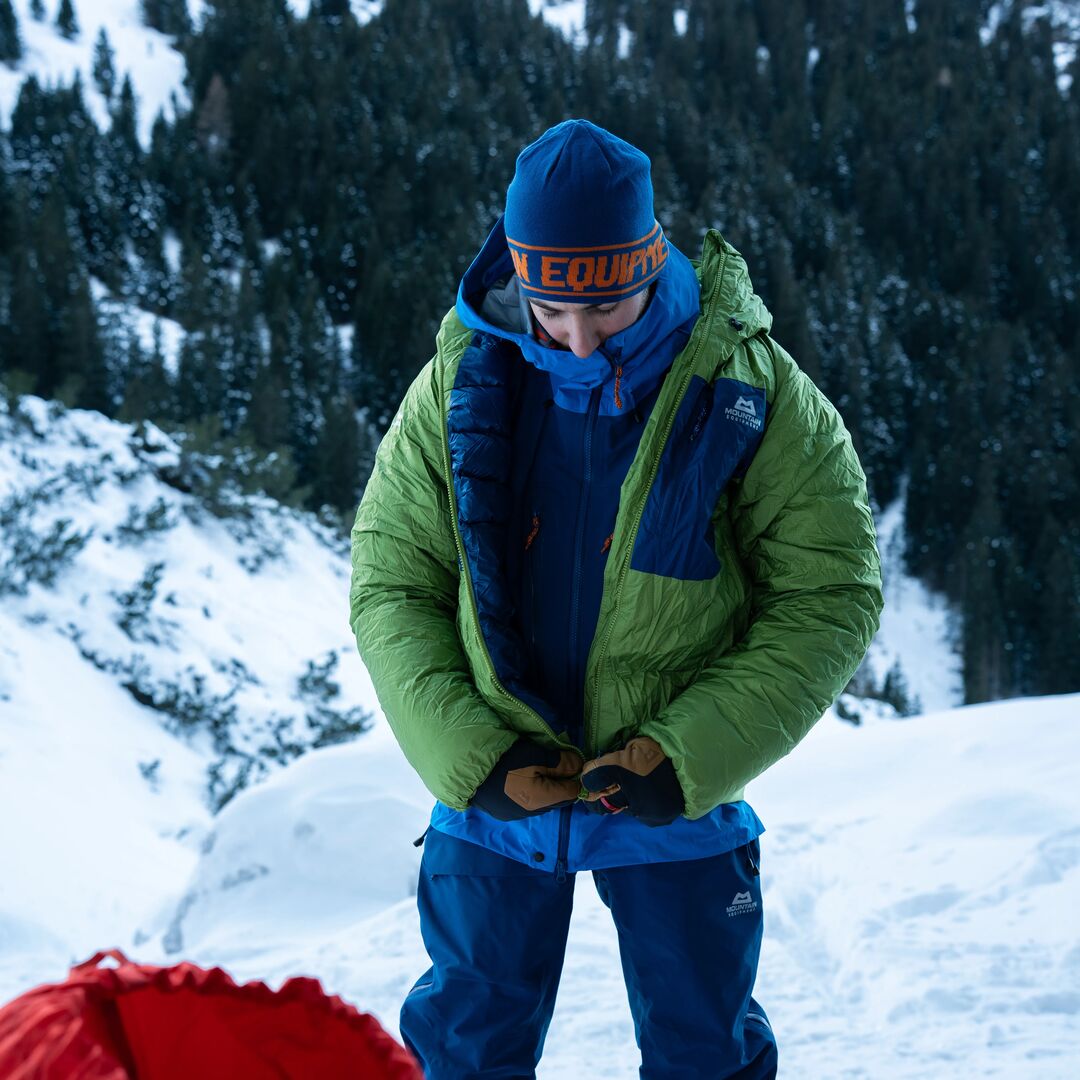
Down has a superb warmth-to-weight ratio and great packability. Despite advances in synthetic fills, they still can’t compete with natural down when you want the absolute warmest, lightest or smallest packing jacket. On top of this down also normally feels softer and, beyond more serious use, many will prefer it for regular wear on that basis alone.
Down’s major drawback is that once it gets wet, it rapidly loses loft and all its insulation. It then takes a very long time to dry fully unless you have access to a tumble dryer, generally not the case in the mountains!
Even the best synthetically insulated jackets come with a penalty in weight and bulk compared to an equivalently warm down jacket, but this is heavily offset by them continuing to insulate even when wet. On top of this, they dry far faster, whether out for days at a time or just trying to get your kit ready to go again at home. This makes synthetic jackets much more reliable and resilient in the sort of wet or damp conditions that many of us regularly find ourselves in.
Many of our pro team use a down jacket for practically everything outside of the famously challenging conditions of places like Scotland in winter or Patagonia in summer. That’s because they’re often climbing at high altitudes where the air is drier, and they are obsessed with saving every possible gram of weight. They are also fully aware of down's limitations and are willing to push themselves, and their kit, to the limits. For many users, though, synthetic jackets are much more forgiving to live with and work fantastically in all conditions.

Pros & cons of down & synthetic insulation
Down insulation |
|
Pros |
Cons |
|
|
Synthetic insulation |
|
Pros |
Cons |
|
|

Which should I get for Scottish winter climbing?
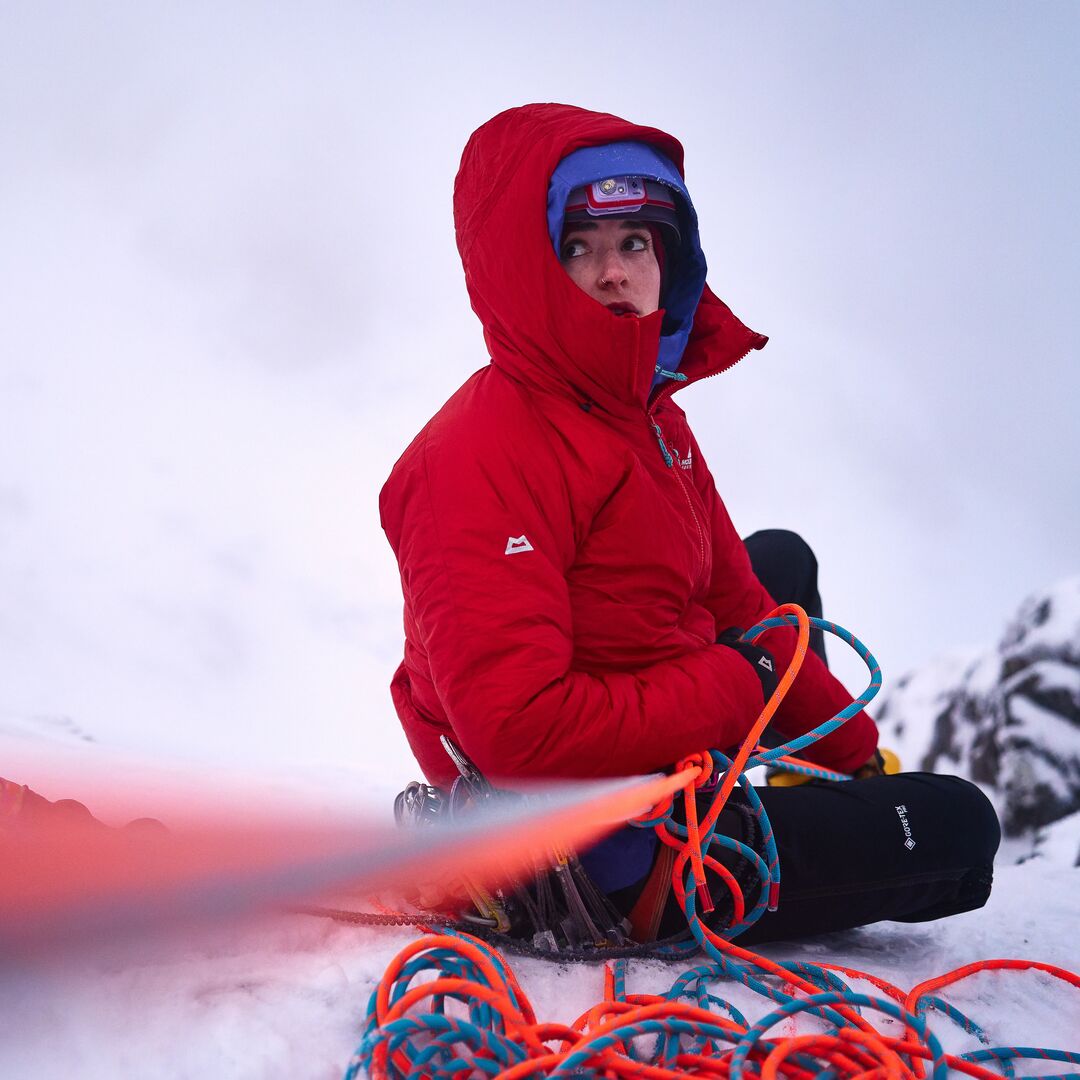
If you climb only on blue sky days in Scotland, then whilst you’ll stay relatively dry, you won’t get much done. Whether you’re just starting out on low-grade gullies and ridges or setting off on remote mixed test pieces, a protective belay jacket that you can rely on is a critical piece of kit. Thrown on over all your layers, it’s an immediate boost of insulation on extended, storm-lashed belays, whilst navigating slowly off a remote plateau in a whiteout or, if the worst happens, in an emergency.
Due to the unpredictable weather, we would always recommend synthetic insulation for Scottish winter days. It will retain the vast majority of its insulating capability when wet, it dries fast, and it isn’t fussy about being stuffed away into a soaking wet pack with damp ropes and other kit. In weather that, at its worst, is as hostile as anywhere in the world, it’s essential to have a last line of defence that will just keep working.
Check out our blog on choosing the right belay jacket for Scotland, click here.

Choosing the right insulated jacket is just as important as anything else on the packing list. With the right jacket, even the harshest of conditions can be negated, leaving valuable energy for where it is needed most.
Whether you need a belay jacket you can hunker down in, or a warm, lightweight backup jacket that lives at the bottom of your bag, an insulated jacket will be high on every climber, mountaineer, or hiker's packing list.